Australia could unlock $134 billion by becoming a regional AI infrastructure hub

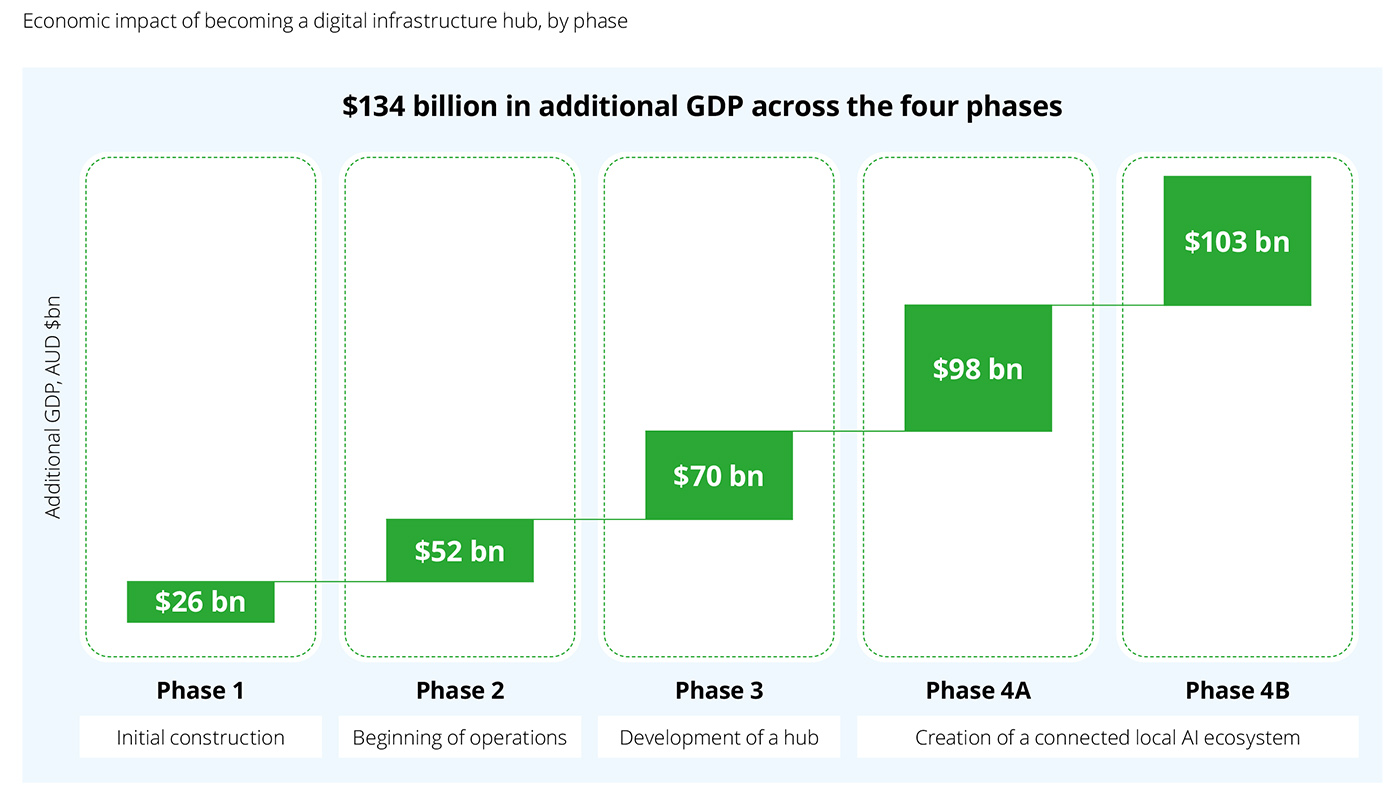
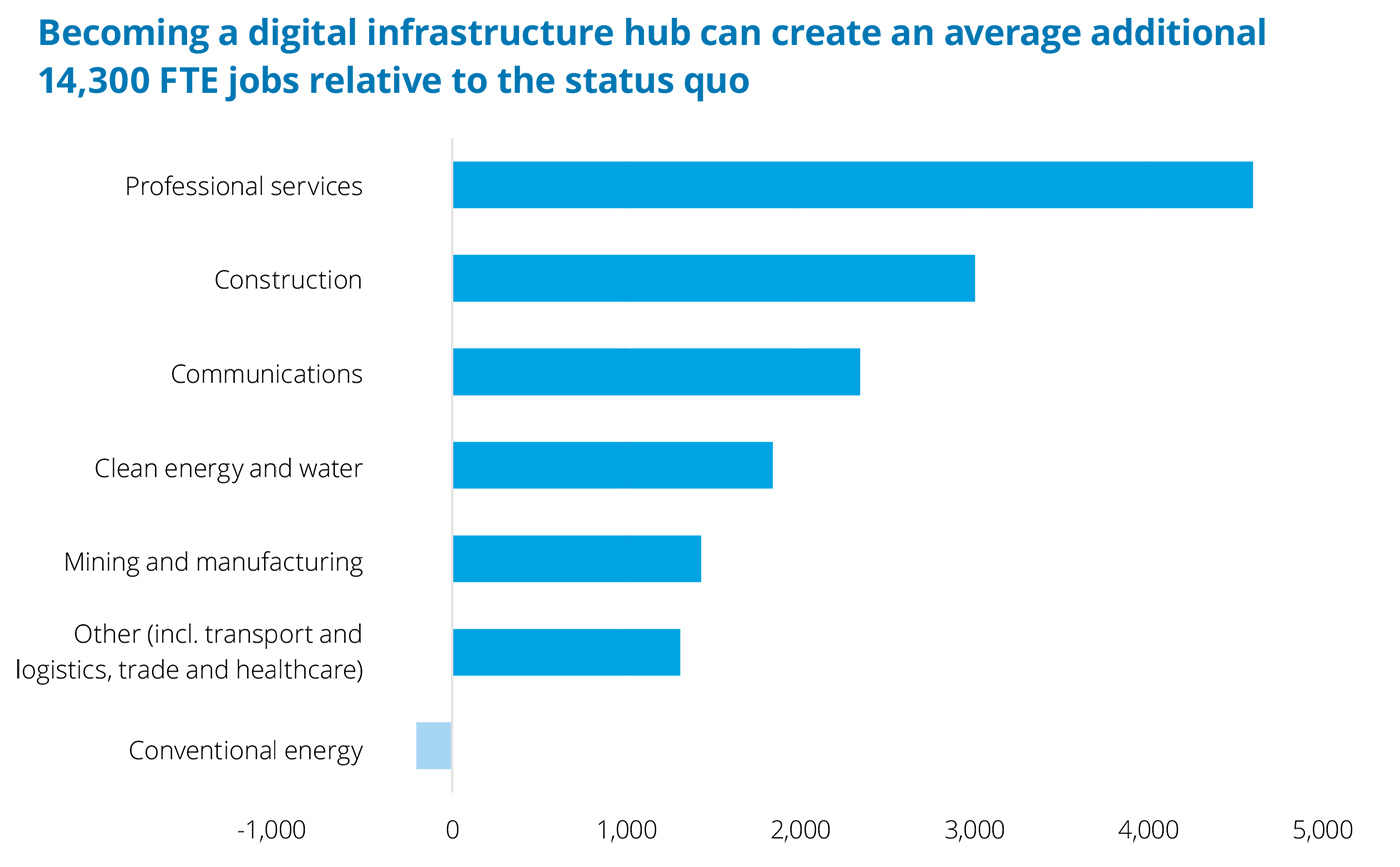
By building a digital infrastructure hub for the Asia Pacific region, Australia could achieve a $134 billion economic boost and create an average of 14,300 new jobs each year through 2050, according to a report from Deloitte Access Economics prepared for Google.
AI technology, which has rapidly matured in the last several years, is the breakthrough innovation of our time. The promise of significant returns is driving investment around the world. In the Asia Pacific region, investment in AI could exceed $165 billion by the year 2028.
Meanwhile, the need for digital infrastructure grows: Data centres, subsea and on-land cables, and more. By building this critical infrastructure, Australia now has the opportunity to position itself as the Asia Pacific regional leader in AI. But this development requires a vision and comprehensive plan.
The report notes that Australia now faces a brief two-year window to capture this opportunity before rival nations in the region secure dominant positions.
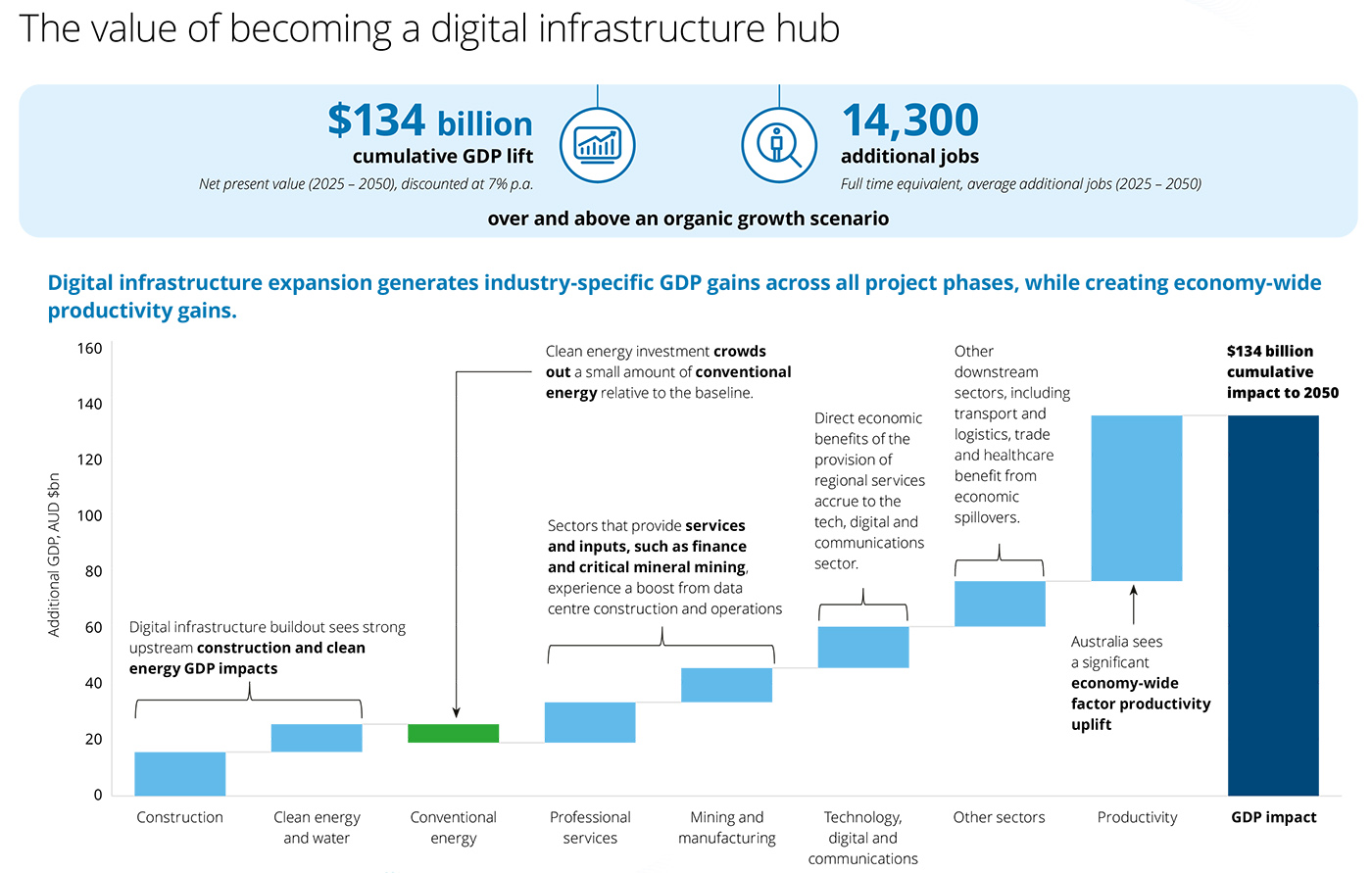
“This is a sliding door moment for Australia. The chance to build an Asia Pacific-focused digital infrastructure ecosystem represents the opportunity to build the next great Australian industry that could support our continued national prosperity for decades to come,” said John O’Mahony, partner at Deloitte Access Economics and lead author of the report.
Expanding computing power and capacity
To capture this economic opportunity, Australia must double its investment target for computing power over the next five years. Digital infrastructure capacity across the nation is already projected to grow by 16% per year, putting Australia on track to reach 3.3 gigawatts of data centre capacity by 2030 through baseline growth.
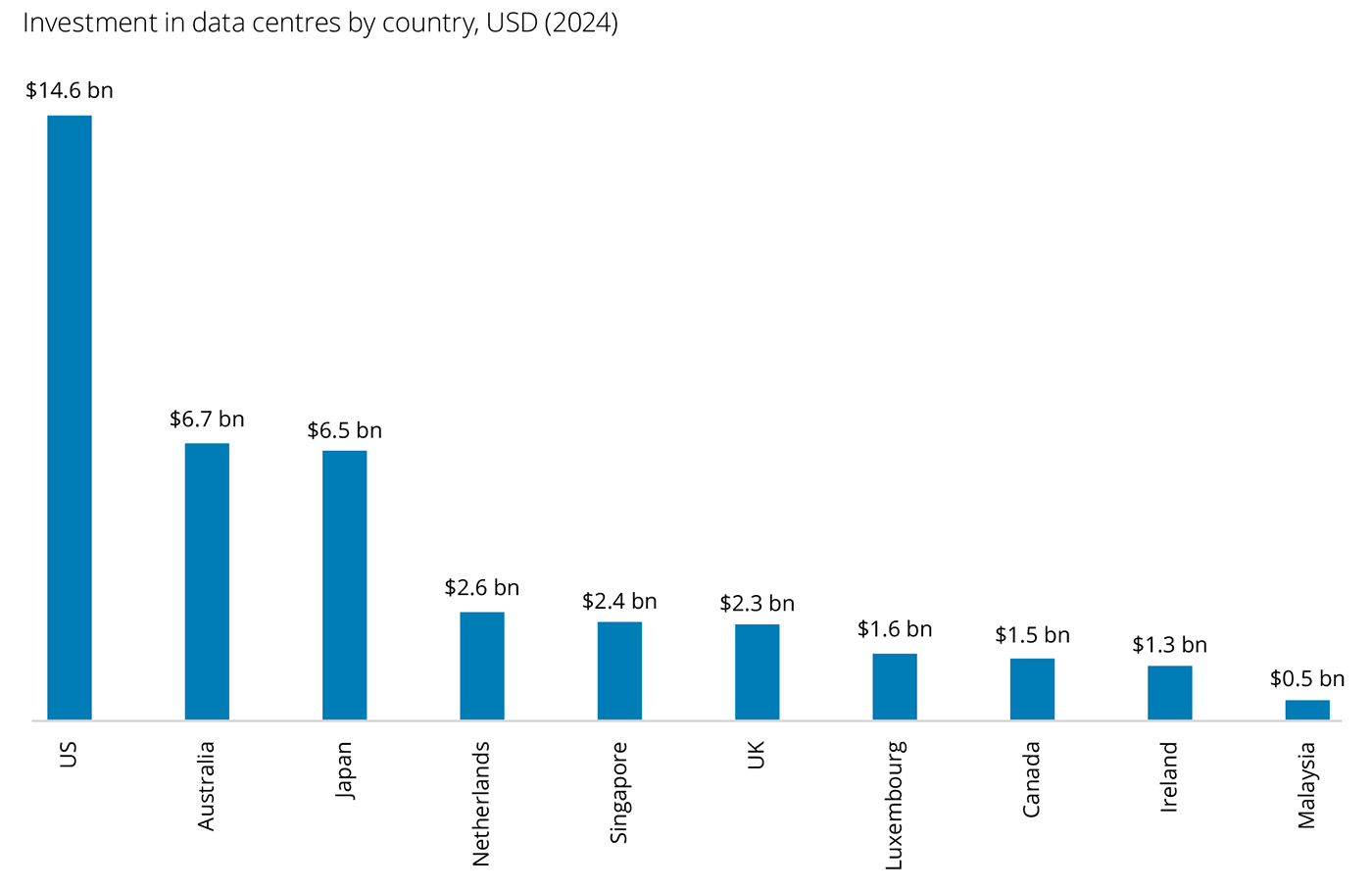
However, establishing a regional hub requires adding another 3.1 gigawatts of high-quality computing capacity, effectively quadrupling current national levels. That is no small feat considering the growing cost of the chips needed for large amount of additional capacity. Australia already invested an estimated $6.7 billion in 2024 and the research estimates a five-fold growth in Australian investment in AI from 2022 to 2030.
Achieving this scale will require an estimated $52 billion in digital infrastructure investment between 2026 and 2030, according to Deloitte. This investment would support key industries across the nation, including construction, public utilities, renewable energy, mining, healthcare, and financial services, while significantly expanding the domestic technology and startup sector.
Regional competition and strategic advantages
Regional demand for AI computing capacity is projected to reach between 55 gigawatts and 92 gigawatts by 2030, with most supporting infrastructure not yet built. Australia is competing directly against nations such as India, Japan, Singapore, Thailand, and Malaysia to host these vital facilities.
The report notes that Australia possesses significant natural advantages over regional competitors. While neighbouring countries face severe constraints regarding available land, water, and clean energy, Australia offers lower population density, vast land, and world-class solar resources. Australia already ranks in the top 10 countries globally for data centre capacity, positioning it well to expand further.
“Across most of these crucial AI factors, Australia is either less constrained than its neighbours or has an outright natural advantage over them. For example, Singapore faces limits on land, water and clean energy, while many other countries in the region have a less stable regulatory environment,” said O’Mahony.
“Despite Australia’s natural advantages, other nations are moving fast to develop their pipelines of digital infrastructure. Australia has the foundations to win this race, but inaction and a failure to remove roadblocks could see the country miss out.”
Clean energy imperative
Expanding data centres will demand substantial amounts of electricity, making the rapid transition to clean energy essential. The report emphasises that digital infrastructure can act as an anchor tenant for renewable energy projects. By securing long-term power purchase agreements, data centres can underwrite new clean energy generation, helping lower transition costs and reduce carbon emissions across the energy grid.
Deloitte identifies eight core factors required to build digital infrastructure, including land, capital, electricity, labour, water, regulation, demand, and time. The report warns that companies should not hesitate because of geopolitical uncertainty, as early movers will capture an outsized share of global returns. Industry leaders, investors, and government leaders must act within two years to streamline regulatory approvals and secure the necessary private capital before the window closes.
“Data is the new oil of the modern economy and compute power is the new engine,” said Pradeep Philip, head of Deloitte Access Economics.
"AI is the technological breakthrough of a generation, and its promise of economic returns is driving significant global investment. Australia can and must become an AI nation to build economic prosperity by driving productivity. Much of the economic potential for Australia is in our own backyard – in the Asia Pacific region alone, investment in AI will exceed $165 billion by 2028.”