More than a third of Australians consider their health to be poor or worse

A new survey from PwC has revealed that Australians are more informed and proactive about their health than the global average, but also rate it as being generally poorer than respondents overseas.
As part of its global consumer health report, PwC quizzed 1,000 Australians on their personal health habits, goals, and opinions across a range of subjects, with their responses raising a seeming contradiction as to activity and perceived health.
With more than 20,000 responses tallied from 27 countries worldwide, Australians were found to spend more time on their physical fitness and money on nutrition than the global average, but sat a long way behind when it came time to rate their health.
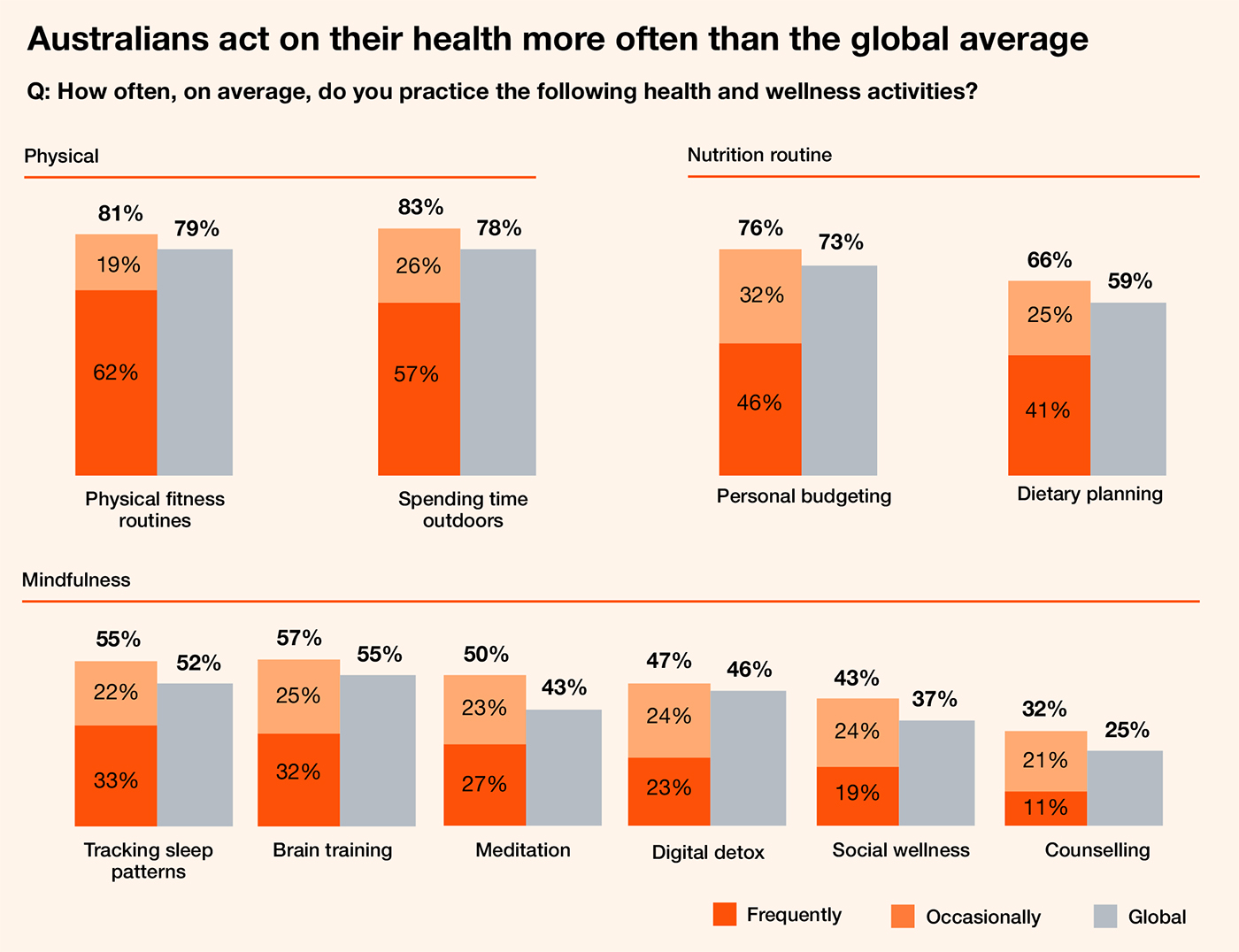
As per the Strategy& data, more than four in five Australians practice a physical fitness routine, almost a third frequently, while over three quarters budget for nutrition and 66 percent engage in dietary planning – all categories scoring above the global average, the latter by seven points. As might be expected, Australians also spend far more time outside than most people elsewhere.
Yet, when asked to rate their health from good or reasonable through to poor or life-restricting, Australians ticked the ‘good’ box five points lower than globally, or 26 percent against 31 percent, while judging themselves to be in poor health at a rate five percent higher, which combined with the ‘life-restricting’ category added up to 35 percent of Australians against 28 percent abroad.
The apparent contradiction raises a number of questions, such as are Australians concentrating more on their fitness and diet due to relative poor health, or is the wide discrepancy in the ‘good’ and ‘poor’ categories perhaps a matter of being more aspirational when it comes to their goals? A breakdown of the responses and those given elsewhere in the survey can maybe provide some clues.
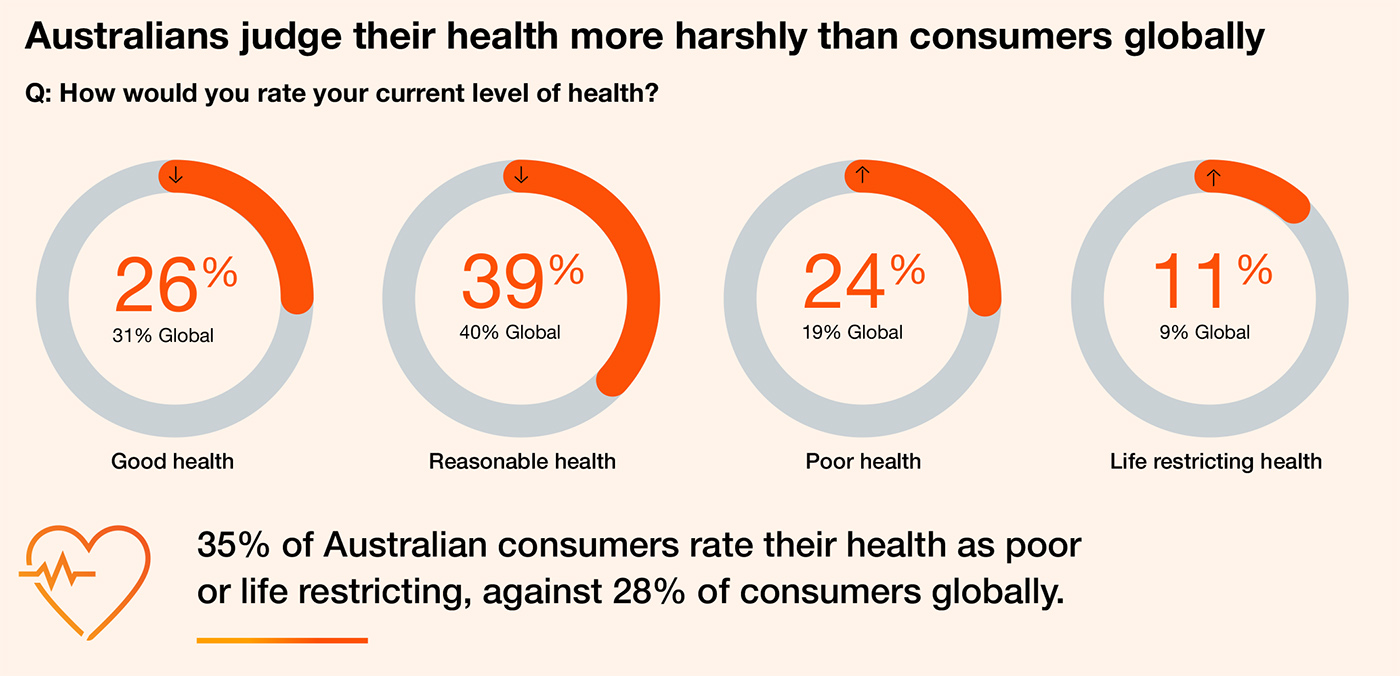
Alarmingly, the number of those who consider their health to be poor or worse rose to a staggering 44 percent among female Australian respondents, against 27 percent of their male counterparts, while the country has also adopted health and fitness apps and wearable in greater numbers than their peers – before also stating they were far more likely to be overwhelmed by health information.
The survey results combined point to Australians feeling under greater pressure than elsewhere to conform to contemporary health standards, or live up to the ‘ideals’ saturating social media and driven by online and personal technology – or, as PwC retail & consumer director Andrew Aoukar puts it, “More data hasn’t made us feel healthier, it’s raised the bar on what ‘healthy’ even means.”
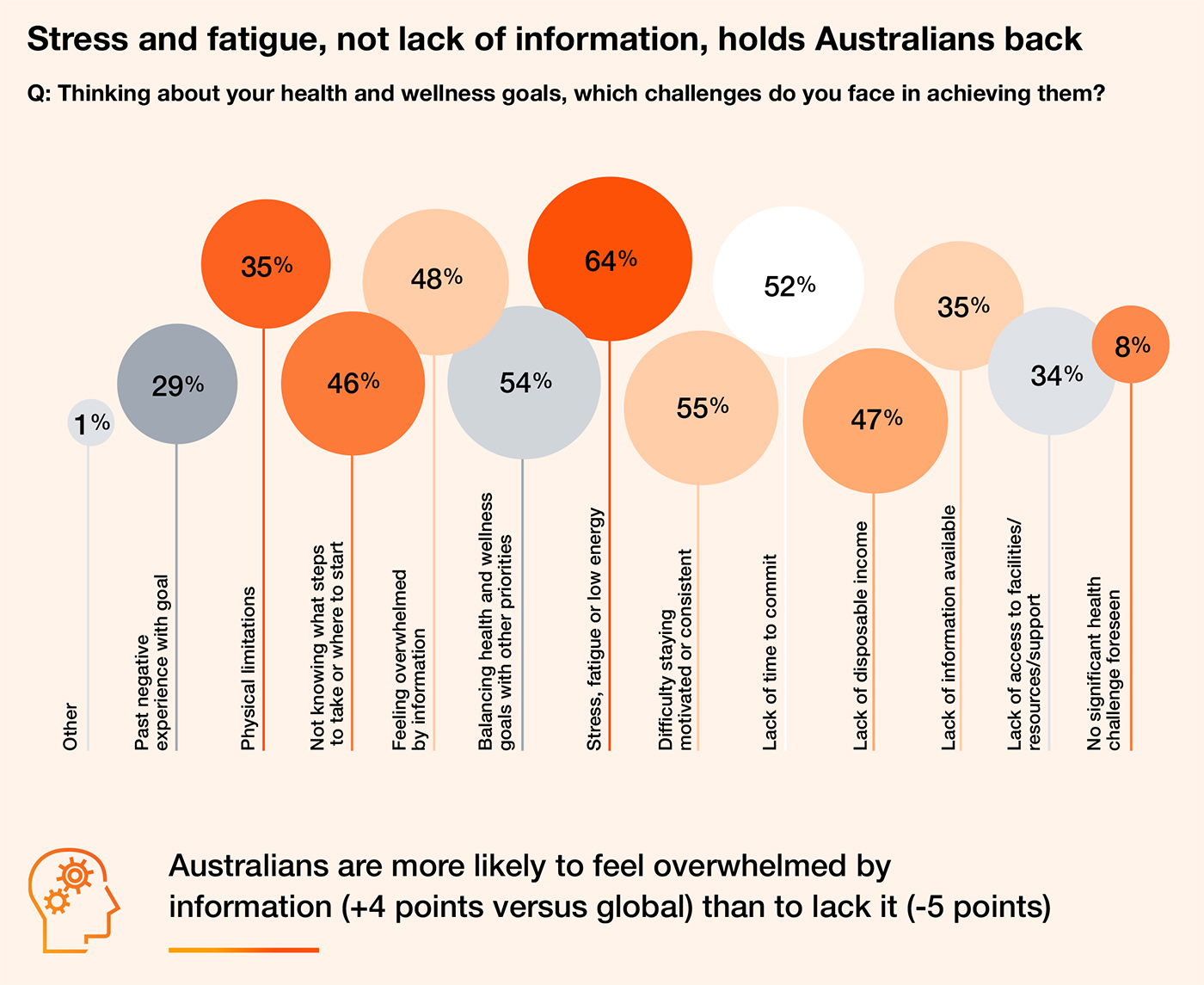
There may also be some differences in how Australians define ‘good health’, beyond a traditional notion of simply being fit and disease-free. Easily topping the list, stress and fatigue were cited by almost two thirds as a primary barrier to meeting their personal health and wellness goals – but reframed, reduced stress and better sleep and mental health also feature among those primary goals.
Over 80 percent of Australians now use healthcare apps and wearables, jumping 14 points from just a year ago, and while they are most commonly being used for exercise instruction & monitoring (40 percent), the next two usages cited after medication reminders were for sleep-tracking (34 percent) and mental health & well-being (28 percent) – above ‘dieting, weight loss & healthy eating’.
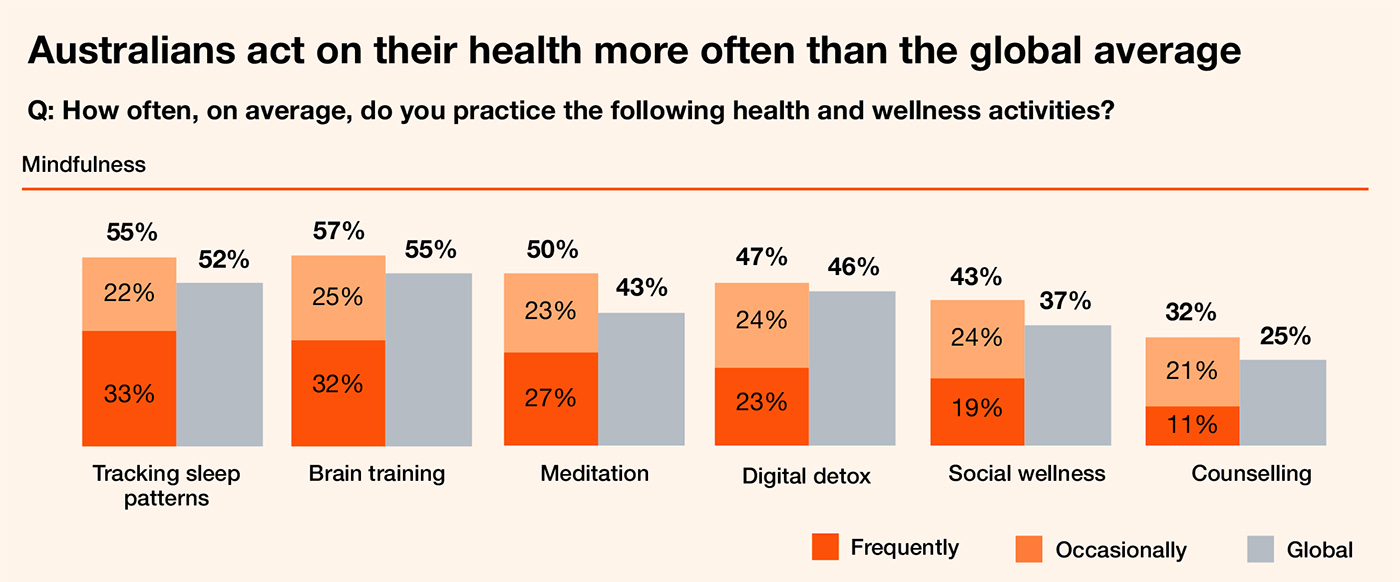
According to PwC, the Australian wellness economy reached a worth of more than $140 billion in 2024, growing at above 7 percent in the last five years. Here, the survey results demonstrate how Australians prioritise their mental well-being, outpointing the rest of the combined world in every ‘mindfulness’ category presented, including by a wide margin as to meditation and counselling.
“The expanded scope of what good health looks like, combined with the reams of advice available to consumers today, means it’s no longer simply about preventing clinical conditions,” the authors say. “Australians are embracing a more holistic sense of their well-being, encompassing traditional goals alongside wellness-oriented ambitions for better mental health, sleep, and personal growth.”
For consumer companies, PwC adds; “Better informed about their health and wellness than ever, the deluge of data from wearables and apps and the constant stream of health-related information online have pushed health, fitness, and mental wellness into the mainstream. A space once preserved for healthcare professionals is opening up as the focus shifts from cure to prevention.”