BCG: M&A deal value in Australia and New Zealand falls to decade low

The M&A market in Australia and New Zealand has had its weakest year in a decade, according to a study by Boston Consulting Group, which identifies several factors behind the downturn. Despite the market slowdown, attractive opportunities remain for deal-savvy organisations and investors.
In fiscal year 2026 – which in Australia and New Zealand runs from 1 July 2025 to 30 June 2026 – total announced deal value sank by one-third to its lowest level in the past decade. M&A value fell to $83 billion, well below the record $246 billion recorded four years earlier.
Boston Consulting Group (BCG) said the most notable feature of the 2026 decline was the absence of large deals, reversing a longstanding trend. Over the previous five years, several major strategic M&A transactions had a significant impact on the market.
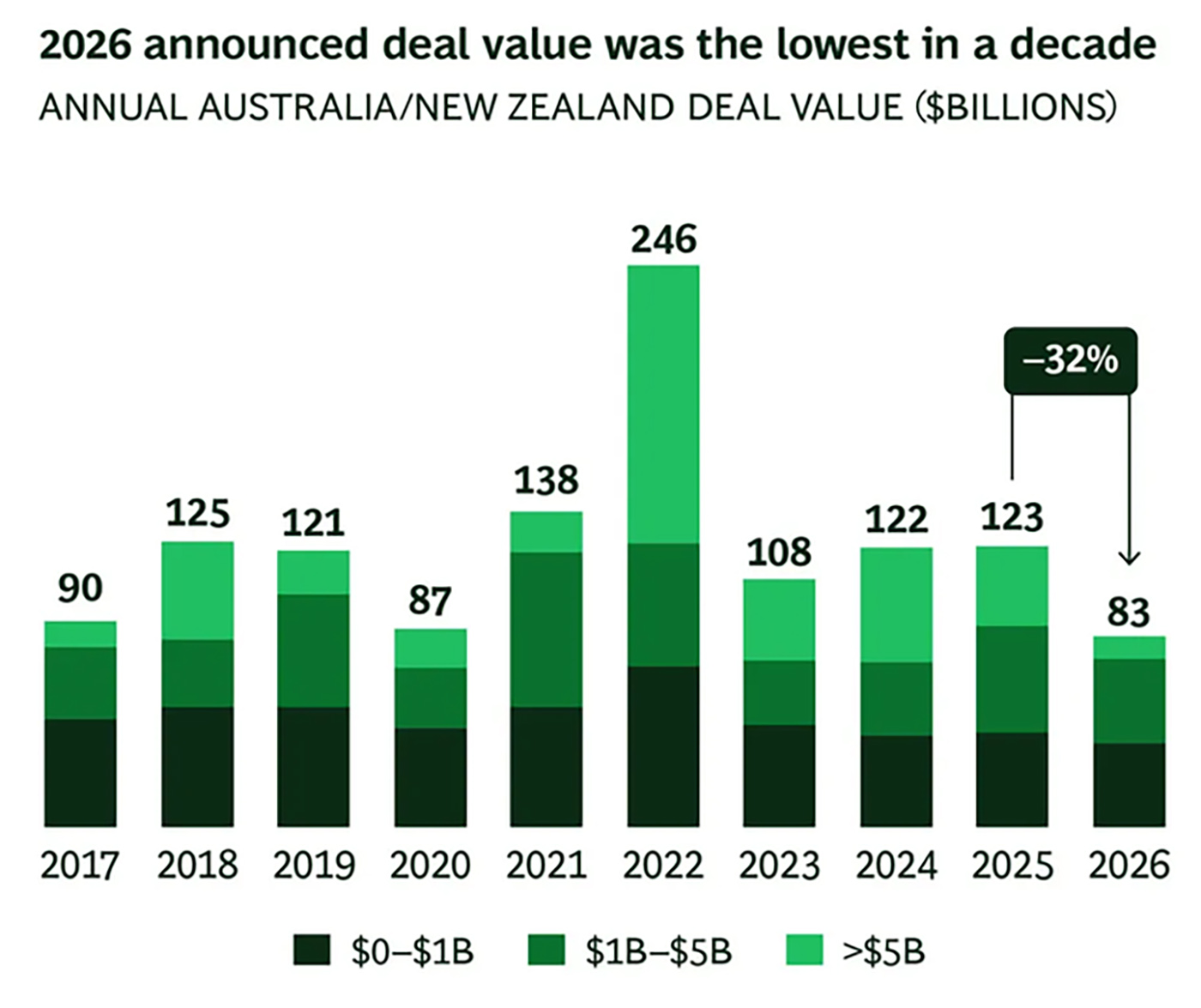
In 2021, Santos Energy acquired Oil Search, consolidating the second- and third-largest energy players on the Australian Securities Exchange (ASX). In 2022, Block, a global point-of-sale technology provider, acquired Afterpay, a buy now, pay later firm that was Australia’s largest listed technology company. A year later, Newmont, a US-listed gold miner, acquired Newcrest, creating the world’s largest gold-mining company.
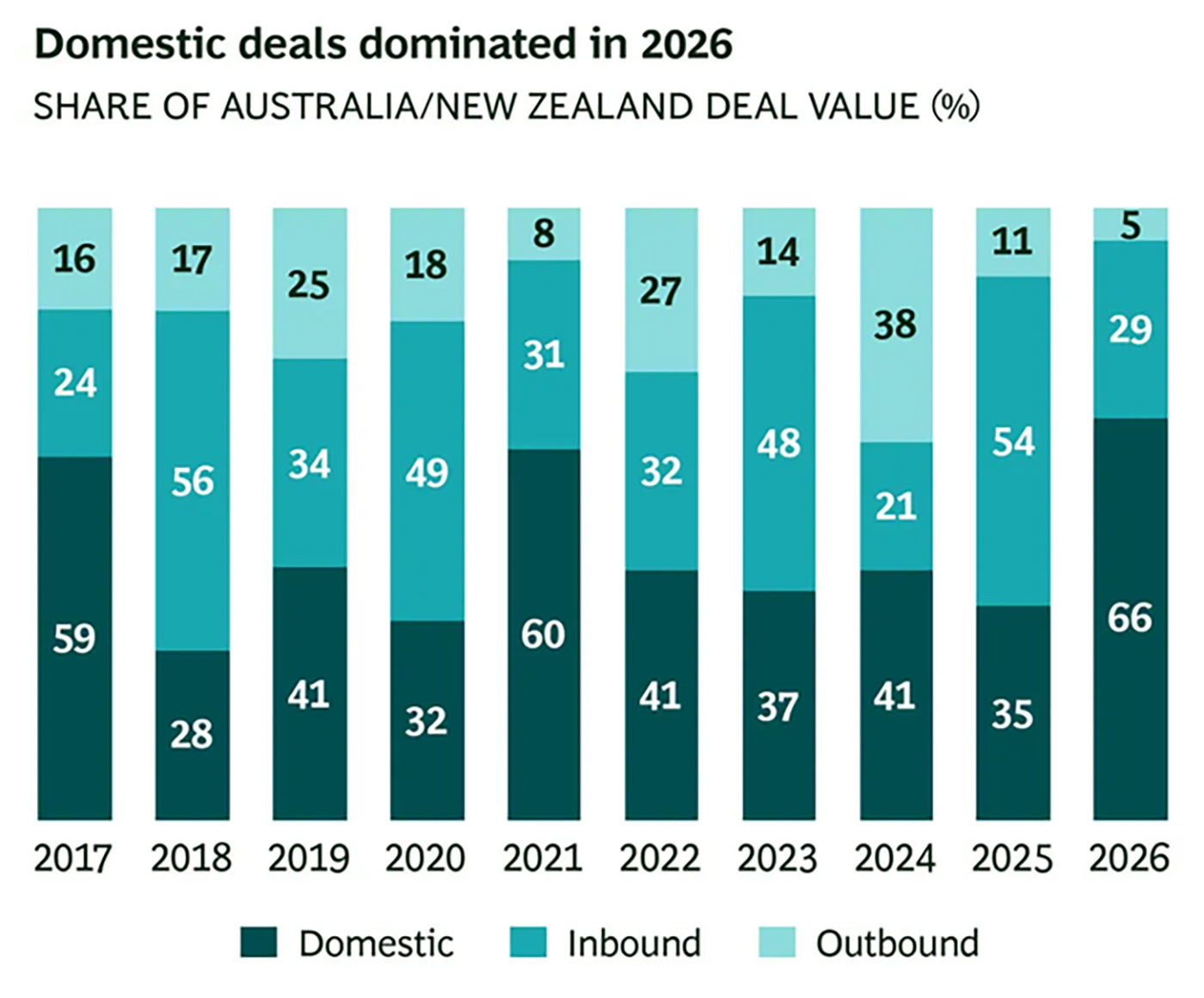
A second notable feature was a shift in the origin of acquiring companies. Inbound transactions, historically a major source of deals, reached their lowest level since 2017. Instead, nearly two-thirds of acquisitions involved domestic companies being acquired by other domestic companies.
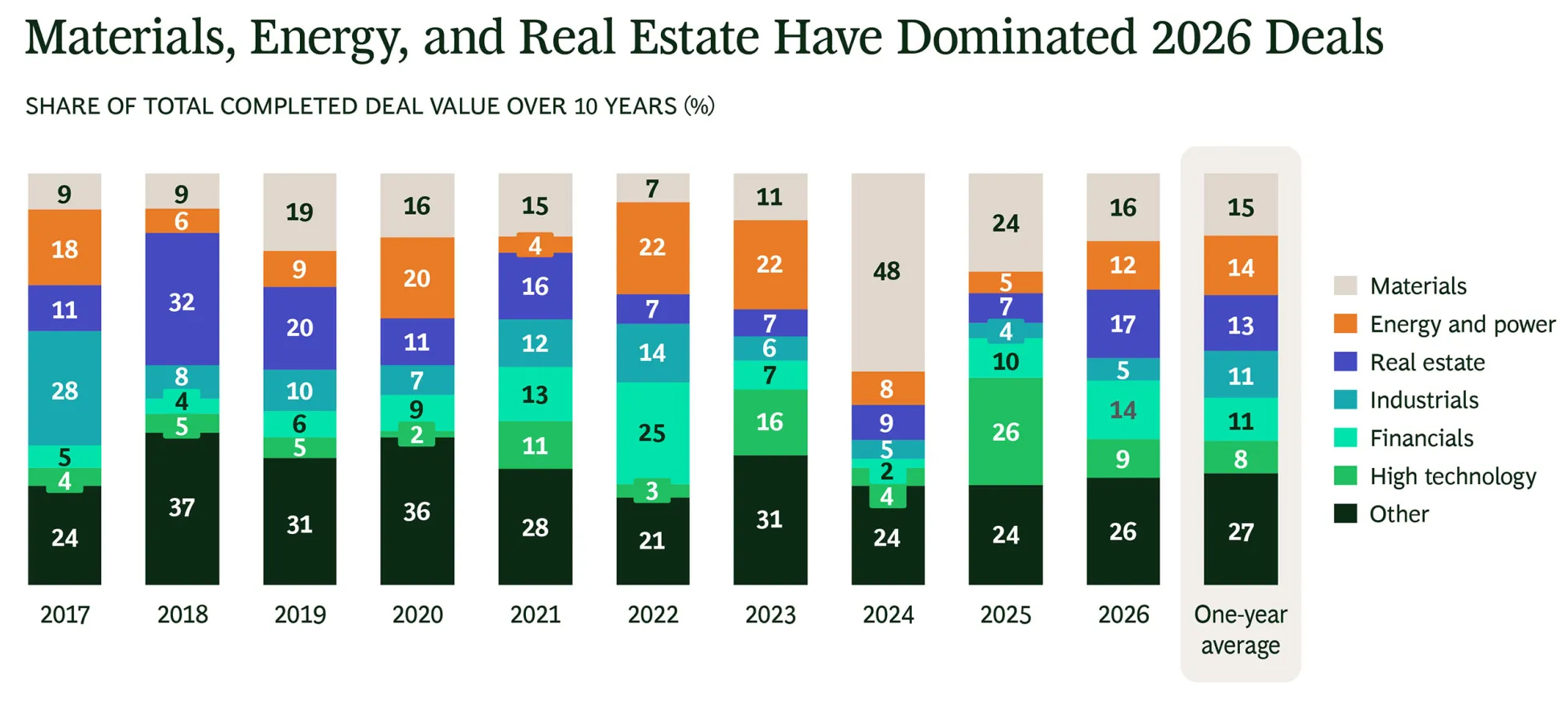
The transactions that have closed so far in fiscal year 2026 have been dominated by deals involving materials, energy and real estate. The largest transaction was the sale of one of Australia’s largest electricity generators from one foreign owner to another. Real estate deals included the privatisation of a medium-sized real estate investment trust (REIT) and several asset-recycling property transactions between REIT owners.
The largest deal in New Zealand was the sale of a consumer dairy business to a global, family-owned conglomerate.
Despite these bright spots, Boston Consulting Group said the region continues to face challenges that may keep M&A activity muted in the near term. “The Australian M&A market remains challenging, but there are still attractive opportunities for organisations with a clear strategic rationale and the patience to execute effectively,” said Matthew Abel, Managing Director and Senior Partner at Boston Consulting Group.
“Success increasingly depends on preparation, valuation discipline and the ability to navigate a more demanding regulatory environment. The best dealmakers are focusing on quality opportunities rather than pursuing transactions for growth’s sake.”
From an industry perspective, Boston Consulting Group said opportunities are likely to emerge in sectors benefiting from long-term structural demand. Australia continues to attract strong investor interest in LNG, energy transition assets and critical minerals such as lithium, copper and rare earths, reflecting the nation’s role in global energy security and the transition to a lower-carbon economy.
Factors driving reduced deal volumes
The study found that four factors playing a notable role in driving down M&A activity: regulatory change, macro headwinds, valuation gaps, and superannuation funds increasingly shaping the path of deals.
Regulations are extending deal timelines
Australia’s new mandatory merger control framework, which took effect on January 1, 2026, represents the most significant change to Australian merger law in decades. The framework requires dealmakers to notify the Australian Competition and Consumer Commission (ACCC) of any deal in which the combined revenue of the merged entities exceeds $200 million in Australian dollars.
Under the new rules, parties must wait for commission clearance before they can proceed. To further complicate dealmaking, Australia’s Foreign Investment Review Board has stepped up its inspection of assets that have national security implications and is tightening its requirements to provide greater assurance about data security, especially in instances involving foreign storage of Australian consumer data.
One example of the impact of these factors is that the largest proposed deal of the last two years was withdrawn, in part due to concerns about the prospect that it might not receive regulatory approval.
These developments are increasing the length of the M&A review process and reducing the probability of deal approval, both of which make transactions costlier and more difficult to execute. For large acquirers, these disadvantages can significantly undercut the benefits of a deal and can introduce a host of risks, including customer and employee attrition and difficulty in realizing deal synergies. For smaller companies, higher fixed costs force some buyers to try to group transactions into larger deals, which limits small, one-off transactions.
Global instability and macro headwinds
Various global and local macroeconomic complications have combined to reduce investors’ expectations for growth in Australia and New Zealand. The initial impact of US tariffs on global trade and inflation, together with a slowing of domestic housing markets, has led to substantially downgraded economic growth forecasts: the IMF reduced its 2025 GDP forecasts from 2.1% to 1.8% in Australia and from 1.9% to 0.8% in New Zealand.
At the same time, inflation fears, exacerbated by heightened tensions in the Strait of Hormuz, have resulted in higher interest rates, up over 2% since 2022.
The impact of higher rates on investor sentiment is according to Boston Consulting Group twofold. First, they increase downward pressure on growth in the domestic market. Second, they limit the benefit of leverage as a catalyst for acquisitions. This is particularly important in the case of cash-funded transactions, which account for 13 of the 20 largest deals in Australia and New Zealand in the past five years.
Valuation gaps persist between buyers and sellers
Reduced growth and higher capital costs are lowering buyers’ valuation expectations. But market soundings suggest that sellers have not lowered their sale price expectations commensurately. In addition, the prevailing environment of higher interest rates means that companies that have existing loans at low rates would have to finance at higher rates on sale. This creates a valuation gap, especially for leveraged buyers.
“While these gaps persist, many private owners of assets, in particular, are opting to wait for improved market conditions, resulting in longer effective hold times and fewer private market transactions,” said Abel.
Superannuation funds becoming critical to deal approval
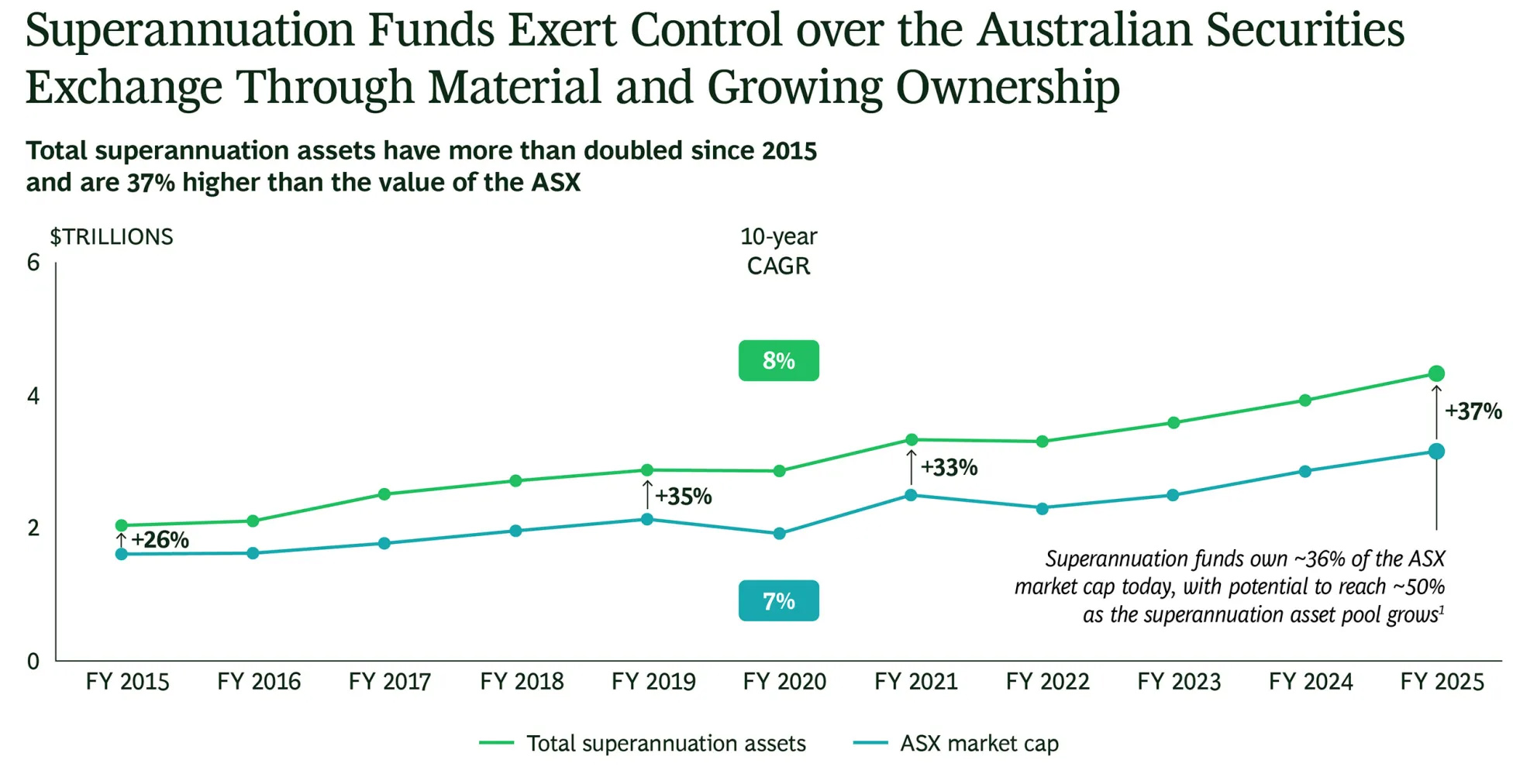
Australia’s defined contribution superannuation system continues to grow. Employers generally must contribute 12% of employee salaries, up to a cap, to individual superannuation accounts. This mandate has created an asset base of greater than $4 trillion – greater than that of the entire listed stock exchange. In addition, superannuation funds own an estimated 36% of the ASX’s market cap.
The listed market is failing to keep pace with the superannuation asset pool and with growth in other global markets, for three reasons. First, over the past decade, inbound deals have outpaced outbound deals by 2.4 to 1, contributing to the removal of companies and investable assets from the ASX and from New Zealand’s NZX. Second, the low relative volume of domestic IPOs translates into limited new, large names in the market. Third, domestic companies in media, packaging, and materials have moved their listings to other markets.
Against this backdrop, some superannuation investors have a bias toward maintaining local listings and have voted against inbound proposals in the face of positive board recommendations, causing prospective acquirers to withdraw from significant deals.
“Superannuation funds are becoming increasingly important stakeholders in Australia’s dealmaking landscape,” said Gates Moss, Partner and Associate Director at Boston Consulting Group. “Since the share of the market controlled by superannuation funds is likely to continue to grow, this headwind will remain strong.”